
 Payment
  My Account
Clearit.ca's Blog on Customs Brokerage and News Updates
How Canadian E-Commerce Brands Can Lower Costs by Consolidating Shipments into the U.S.
The days of shipping dozens of low-value parcels to the U.S. duty-free are almost over. With the elimination of the U.S. $800 De Minimis threshold expected in 2025, Canadian e-commerce businesses that rely on small, frequent shipments are facing a new challenge, higher duties, more paperwork, and greater shipping costs.
But not all hope is lost. Forward-thinking Canadian sellers are turning to shipment consolidation as a smarter, more cost-eff...
Avoiding Double Duty: How Canadian Importers Can Navigate Goods Returned from the U.S.
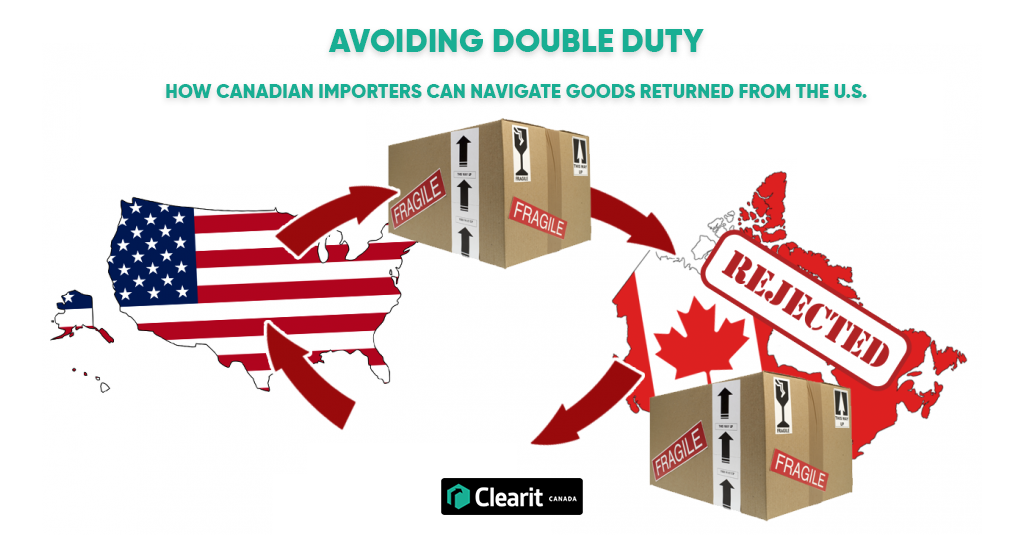
Canadian businesses shipping to U.S. customers often face an unexpected challenge when products are returned across the border — double duty. If not handled properly, goods that were originally exported from Canada and then returned, due to returns, warranty issues, or unsold stock, can be treated as new imports by the Canada Border Services Agency (CBSA). This can result in paying duties and taxes twice on the same goods — a costly and avoid...
Preparing Documentation to Support U.S. Refund Claims (From a Canadian Perspective)

As trade between Canada and the U.S. expands, refund claims under IEEPA tariffs and Section 1520(d) of USMCA have become increasingly important for cross-border businesses.
For Canadian exporters, proper documentation is not just paperwork, it’s the difference between a smooth refund process and costly delays.
In this article, we’ll walk Canadian exporters, SMBs, and logistics teams through the documentation needed to support U.S. refund ...
How USMCA Refund Rules Impact Canadian Exporters & Re-Importers
For Canadian exporters, the United States-Mexico-Canada Agreement (USMCA) has opened the door to streamlined cross-border trade. Yet many businesses overlook one crucial aspect: refund and drawback rules. Whether you’re sending goods to the U.S. for resale or re-importing items back into Canada, understanding refund provisions can be the difference between profitability and unexpected costs.
In this article, we’ll break down what refund ru...
Selling to U.S. Customers? How the End of the De Minimis Threshold Will Change Cross-Border Trade
The U.S. is Canada’s largest trading partner, and for thousands of Canadian businesses, selling to the U.S. is an essential growth strategy. However, the landscape for cross-border shipping is shifting dramatically. With the elimination of the U.S. $800 De Minimis threshold expected in 2025, Canadian exporters and e-commerce sellers must rethink how they manage low-value shipments to U.S. customers.
This change means that nearly every packag...
Decoding the CBSA Trade Verification Priorities List: What Canadian Importers Need to Know in 2025
For Canadian importers, few things are as crucial as staying on top of compliance with the Canada Border Services Agency (CBSA). One of the most significant tools the CBSA uses to enforce trade compliance is the Trade Verification Priorities List, a roadmap of the product categories and customs issues the agency will be paying extra attention to.
In 2025, importers need to understand how the list works, its impact on operations, and how to pre...
Managing Seasonal Imports: Peak Season Strategies for Retailers and Distributors

For Canadian retailers and distributors, managing seasonal demand can make or break the entire year. Holiday goods, back-to-school items, and summer inventory all need careful timing. Import too late and you miss sales. Import too early and you tie up cash.
This guide gives clear, practical steps to manage seasonal imports. Use these tactics to reduce delays, protect margins, and keep customers happy.
Understand the peak season problems
Seas...
Unlocking Savings: A Practical Guide to Canada’s Duty Remission and Relief Programs for Importers
For many Canadian importers, customs duties are a persistent drain on profit margins. Whether you’re importing textiles, electronics, or consumer products, tariffs and duties can add up quickly. That’s where Canada’s duty remission and relief programs come in. Designed to help businesses stay competitive, these programs allow eligible importers to recover or avoid paying certain duties under specific conditions.
For companies managing hi...
Carbon Border Adjustments & Canada: What Importers Should Watch for in 2025–26

As the global economy adapts to the urgency of climate change, Carbon Border Adjustment Mechanisms (CBAMs) are quickly moving from concept to reality. These measures impose carbon-based fees or duties on imports according to their emissions, helping level the playing field for domestic producers and encouraging greener global supply chains.
For Canadian importers, 2025–26 could see the arrival of these regulations. This blog breaks down what...
The Most Imported Product Categories in Canada and Their Customs Requirements

Canada’s import market covers a wide range of industries, from consumer goods to industrial equipment. Each product category comes with its own customs rules, duty rates, and regulatory considerations.
Whether you are a seasoned importer or just starting, understanding these differences can save you from costly delays and compliance issues.
1. Electronics and Consumer Technology
Electronics such as smartphones, laptops, and home appliances...
