
 Payment
  My Account
Importing health and wellness supplements into Canada is not like importing regular consumer goods. Vitamins, herbal products, probiotics, sports nutrition, and natural health products (NHPs) are heavily regulated, and even small documentation mistakes can result in CBSA holds, Health Canada refusals, or forced re-exports.
In 2025, enforcement is tighter than ever. With increased data sharing between CBSA and Health Canada, shipments that once passed through with minimal review are now routinely flagged for full compliance checks.
This guide explains the rules, approvals, and documentation required to import supplements into Canada, and how to avoid the most common errors.
Why Supplements Face Higher Scrutiny at the Canadian Border
Health and wellness supplements are regulated because they:
- Are ingested or applied to the body
- Make health or wellness claims
- Can pose safety risks if mislabeled or misformulated
As a result, these products fall under Health Canada oversight, not just CBSA customs clearance.
Shipments are routinely reviewed for:
- Product licensing
- Ingredient compliance
- Label accuracy
- Advertising and claims consistency
- Proper importer authorization
Failure in any one area can stop a shipment.
What Counts as a Health or Wellness Supplement in Canada?
Health Canada generally classifies these products as Natural Health Products (NHPs), including:
- Vitamins and minerals
- Herbal supplements
- Probiotics
- Protein powders and amino acids
- Traditional medicines
- Sports and performance supplements
- Weight management products
If your product makes a health claim, it is almost certainly regulated.
Key Regulatory Authority: Health Canada
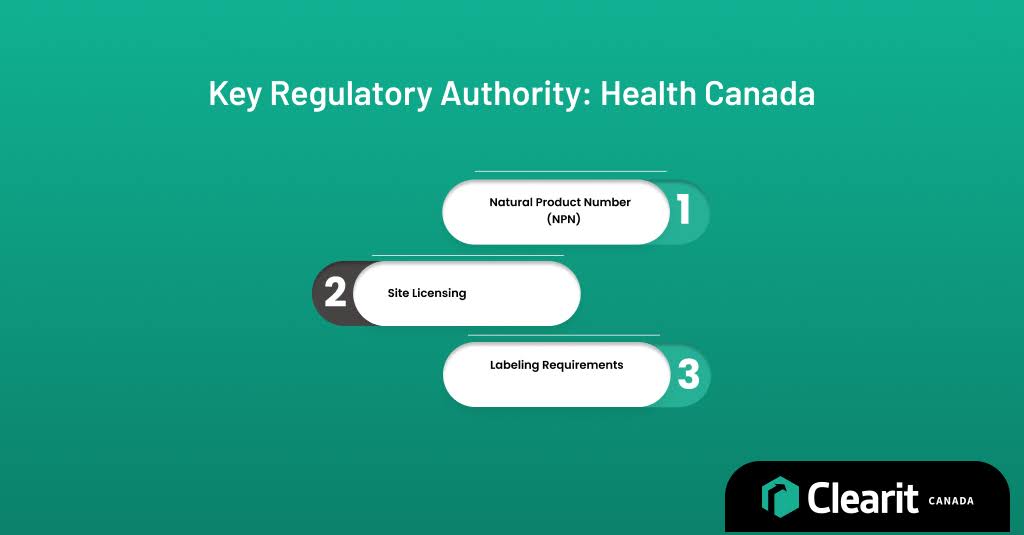
Regulatory Authority
Before importing supplements, it’s critical to understand that:
- CBSA clears goods at the border
- Health Canada authorizes the product itself
CBSA will not release supplements without proof of Health Canada compliance.
1. Natural Product Number (NPN): The Core Requirement
Most supplements require a Natural Product Number (NPN) issued by Health Canada.
The NPN confirms that:
- Ingredients are approved
- Dosages are safe
- Claims are acceptable
- Product meets Canadian regulations
No NPN means no release.
Even products legally sold in the U.S. or EU must be approved separately for Canada.
2. Site Licensing: Who Can Import Supplements
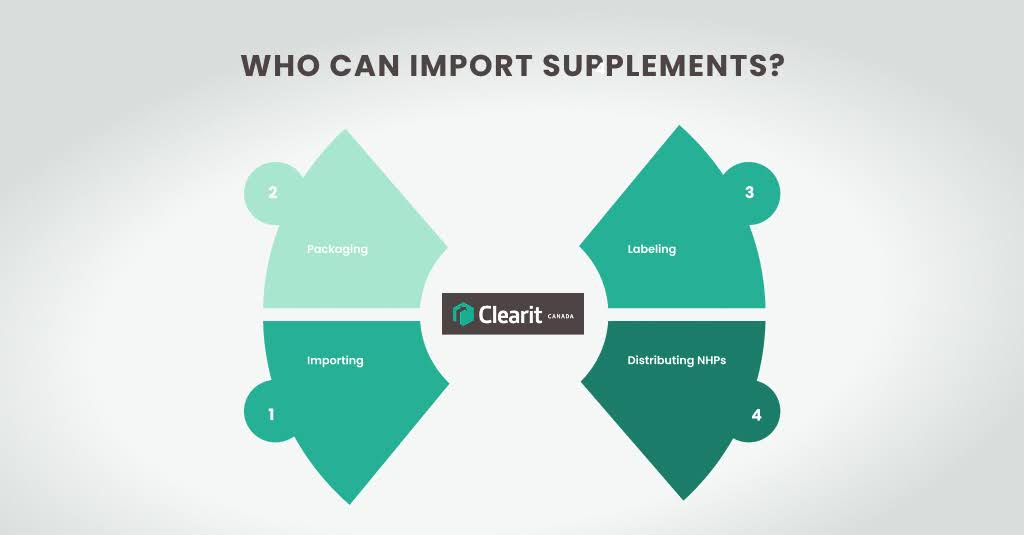
The importer must often hold a Health Canada Site Licence, which authorizes:
- Importing
- Packaging
- Labeling
- Distributing NHPs
Without a valid site licence, CBSA may refuse entry, even if the product has an NPN.
3. Labeling Requirements (Strict and Non-Negotiable)
Canadian supplement labels must meet specific formatting rules, including:
- English and French (bilingual)
- NPN displayed clearly
- Medicinal and non-medicinal ingredients
- Dosage instructions
- Risk statements and warnings
- Lot number and expiry date
Labels that comply in the U.S. often do not meet Canadian standards.
Customs Documentation Required for Supplements
Even with Health Canada approval, your customs paperwork must still be accurate.
Commercial Invoice
Must include:
- Product name matching NPN listing
- HS code
- Country of origin
- Unit and total value
- Currency
- Importer information
Learn more about preparing compliant invoices.
Packing List
Must align with invoice quantities and product descriptions.
Health Canada Documentation
May include:
- NPN confirmation
- Site licence
- Product formulation summary (on request)
HS Classification for Supplements
Supplements are often classified under:
- Chapter 21 (food preparations)
- Chapter 30 (pharmaceutical products)
Misclassification can result in:
- Incorrect duties
- GST errors
- Delays during review
Common Reasons Supplement Shipments Are Held
- Missing or invalid NPN
- Labels not matching approved product details
- Ingredient discrepancies
- Unapproved health claims
- Incorrect HS codes
- Importer lacks site licence
- Invoice descriptions don’t match product license
These issues almost always require manual intervention to resolve.
How CBSA Holds Work for Supplements
Shipments may be flagged for:
- Document review
- Health Canada referral
- Physical examination
- Sampling for analysis
Learn more about common CBSA hold types here.
How to Import Supplements into Canada Smoothly
Step 1: Confirm Product Classification
Determine whether your product is regulated as an NHP.
Step 2: Secure an NPN
Apply before shipping, approval can take weeks or months.
Step 3: Validate Label Compliance
Ensure labels match approved claims exactly.
Step 4: Confirm Importer Licensing
Verify site licence requirements.
Step 5: Pre-Clear Documentation
Have a customs broker review everything before shipping.
A simple framework to set this up can be found here.
Conclusion
Importing health and wellness supplements into Canada is regulatory-first, not logistics-first.
Without Health Canada approvals, compliant labels, and accurate customs documentation, shipments will be delayed, or refused outright.
Before your next supplement shipment crosses the border, make sure your compliance foundation is solid.
Start with a clear, structured importing framework here.
FAQs
Can I import supplements for personal use?
Small quantities may be allowed, but commercial resale requires full compliance.
Can I use U.S. labels in Canada?
No. Labels must meet Canadian bilingual and content rules.
Do probiotics need NPNs?
Yes, in most cases.
Are online supplement sellers subject to the same rules?
Yes. E-commerce shipments are not exempt.
Can CBSA seize non-compliant supplements?
Yes. Goods can be detained, refused, or destroyed.
