
 Payment
  My Account
Commercial surveillance equipment has become an essential part of modern business operations. Retail stores, warehouses, office buildings, manufacturing facilities, transportation hubs, and construction sites increasingly rely on surveillance systems to improve security, monitor operations, and reduce risk.
As demand continues to grow, many Canadian businesses source surveillance equipment from international suppliers. However, importing cameras and security systems involves more than simply purchasing electronics and arranging transportation. Depending on the equipment involved, importers may face classification challenges, wireless communication requirements, valuation considerations, and customs compliance obligations.
This guide explains what Canadian businesses should know before importing commercial surveillance equipment into Canada.
What Qualifies as Commercial Surveillance Equipment?
Commercial surveillance equipment covers a broad range of products designed for monitoring, recording, and security purposes.
Common examples include:
- CCTV cameras
- IP cameras
- Wireless security cameras
- Network video recorders (NVRs)
- Digital video recorders (DVRs)
- Video management systems
- Access control systems
- Motion detection sensors
- License plate recognition systems
- Remote monitoring equipment
- Commercial alarm systems
- Video analytics equipment
Many modern systems combine cameras, software, cloud connectivity, artificial intelligence, and networking capabilities into a single integrated solution.
Why Surveillance Equipment Can Create Customs Challenges
Unlike simple consumer electronics, surveillance systems often consist of multiple components with different functions.
A single shipment may include:
- Cameras
- Servers
- Storage devices
- Networking hardware
- Wireless transmitters
- Software licenses
- Monitoring equipment
As a result, CBSA may require more detailed classification and valuation information than importers expect.
The complexity increases when equipment includes advanced features such as remote access, AI-powered analytics, or cloud-based monitoring services.

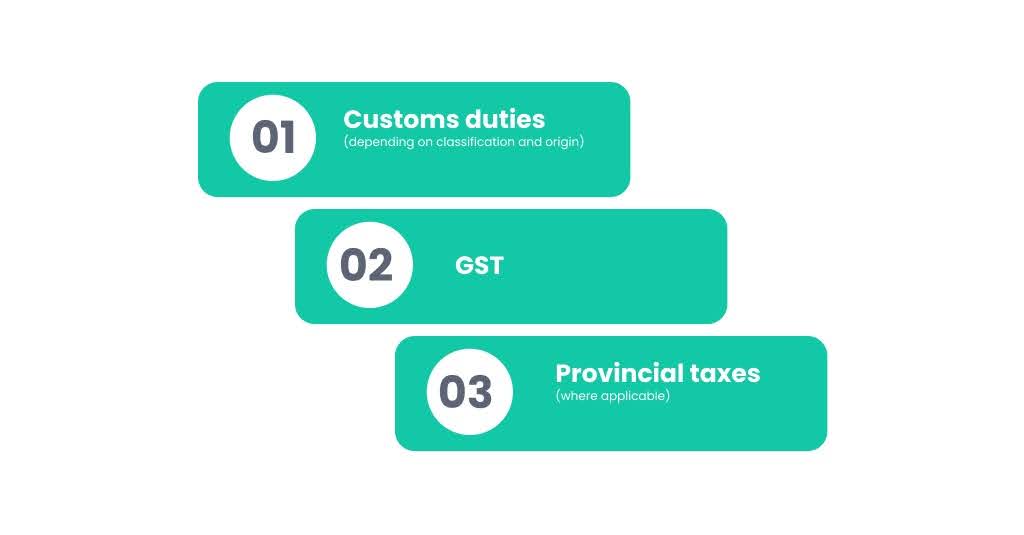
Commercial surveillance equipment imported into Canada is generally subject to:
- Customs duties (depending on classification and origin)
- GST
- Provincial taxes where applicable
Duty rates vary based on:
- Product classification
- Country of manufacture
- Product functionality
- Trade agreement eligibility
Many surveillance products are classified as electronic or communication equipment, but the specific tariff treatment depends on the product’s primary purpose.
Importers should determine duty exposure before shipment to avoid unexpected landed costs.
Classification Challenges
Classification is one of the most important customs considerations when importing surveillance equipment.
Products that may appear similar can receive different tariff treatment depending on their technical specifications.
For example:
- A basic CCTV camera may be classified differently from an AI-enabled monitoring system.
- A wireless security camera may have different classification considerations than a wired camera.
- A surveillance server may be treated differently from a standard networking device.
CBSA generally evaluates the product’s principal function when assigning classification.
Descriptions such as:
- “Security equipment”
- “Monitoring system”
- “Camera products”
They are often too vague to support proper classification.
Importers should use precise technical descriptions whenever possible.
Wireless and Communication Compliance
Many surveillance systems contain wireless technologies that may be subject to Canadian communication regulations.
Examples include:
- Wi-Fi-enabled cameras
- Bluetooth devices
- Remote monitoring systems
- Wireless access control equipment
Importers should verify compliance with applicable Innovation, Science and Economic Development Canada (ISED) requirements.
Failure to meet communication standards can result in delays, inspections, or requests for additional documentation.
Products with wireless functionality typically require more scrutiny than standard wired equipment.
AI and Smart Surveillance Systems
The surveillance industry is rapidly adopting intelligent monitoring technologies.
Modern systems may include:
- Facial recognition capabilities
- Behavioral analytics
- Automated alerts
- License plate recognition
- Smart tracking systems
These features often rely on integrated software, cloud connectivity, and advanced processing hardware.
Importers should understand how these features affect product descriptions, classification, and valuation declarations.
As surveillance technology evolves, customs documentation must evolve as well.
Valuation Requirements
Many commercial surveillance systems are high-value imports.
The declared customs value may include:
- Hardware costs
- Software licenses
- Integrated management platforms
- Specialized accessories
- Engineering or configuration charges
- Packaging costs
Importers sometimes overlook software-related costs when declaring value.
However, embedded software and licensing arrangements can affect customs valuation depending on the structure of the transaction.
Proper valuation is essential to avoid reassessments and penalties.
Documentation Requirements
Commercial Invoice
The commercial invoice should clearly identify:
- Product type
- Model numbers
- Technical specifications
- Unit values
- Country of origin
Instead of using:
- “Camera system”
Consider descriptions such as:
- “Commercial IP surveillance camera”
- “Network video recorder with remote monitoring capability”
- “Wireless access control monitoring system”
Detailed descriptions help support classification and facilitate customs processing.
Packing List
A packing list should identify:
- Individual equipment components
- Quantities
- Carton contents
- System accessories
This becomes especially important when importing complete surveillance systems that contain multiple devices.
Supporting Technical Documentation
Importers should maintain:
- Product specifications
- Technical manuals
- Compliance certificates
- Communication certifications
- Software licensing records
These documents can be extremely useful if CBSA requests additional information.
Shipping Considerations
Commercial surveillance systems are commonly imported through:
- Air freight
- Ocean freight
- Consolidated shipments
- Full container shipments
Larger projects such as warehouse or facility security installations often involve multiple shipments of interconnected equipment.
Importers should ensure that documentation remains consistent across all shipments to avoid customs complications.
Proper packaging is particularly important because many surveillance devices contain sensitive electronic components.
Common Compliance Risks
Several issues frequently arise when importing surveillance equipment.
Misclassification
Products with multiple functions are often classified incorrectly.
Incomplete Product Descriptions
Generic descriptions can trigger customs reviews.
Incorrect Valuation
Software and licensing costs may be omitted.
Missing Technical Documentation
Importers may struggle to support classifications during reviews.
Wireless Compliance Issues
Communication-enabled devices may require additional supporting documentation.

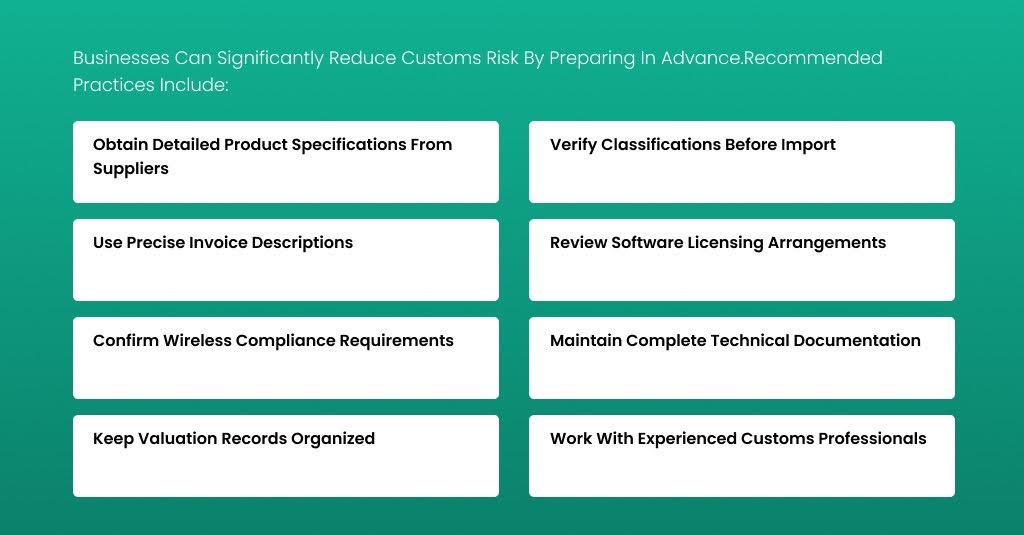
Businesses can significantly reduce customs risk by preparing in advance.
Recommended practices include:
- Obtain detailed product specifications from suppliers
- Verify classifications before import
- Use precise invoice descriptions
- Review software licensing arrangements
- Confirm wireless compliance requirements
- Maintain complete technical documentation
- Keep valuation records organized
- Work with experienced customs professionals
These steps can help reduce delays and improve customs predictability.
Conclusion
Commercial surveillance equipment is becoming increasingly sophisticated, combining electronics, networking technology, software, and intelligent monitoring capabilities. While these products deliver significant business benefits, they also create additional customs and compliance considerations.
Importers who understand classification, valuation, documentation, and regulatory requirements before shipment are far more likely to experience smooth customs clearance. As surveillance technology continues to evolve, maintaining strong import compliance practices will remain essential to successful procurement and supply chain management.
FAQs
Are surveillance cameras subject to customs duties in Canada?
Yes. Duty rates depend on classification, origin, and trade agreement eligibility.
Do wireless surveillance devices have additional requirements?
Potentially. Wireless products may require compliance with Canadian communication regulations.
Can software affect customs valuation?
Yes. Certain software licenses and related costs may affect declared value.
Are AI-powered surveillance systems classified differently?
They may be, depending on their primary function and technical characteristics.
What documents are required when importing surveillance equipment?
Typically, a commercial invoice, packing list, transportation documents, and supporting technical specifications.
Can CBSA review surveillance equipment after importation?
Yes. CBSA may verify classification, valuation, and origin declarations.
Why are detailed product descriptions important?
They help support proper classification and reduce customs delays.
Should businesses use a customs broker when importing surveillance systems?
For high-value or complex systems, professional customs assistance is strongly recommended.
